Brew
Mar 8, 2026
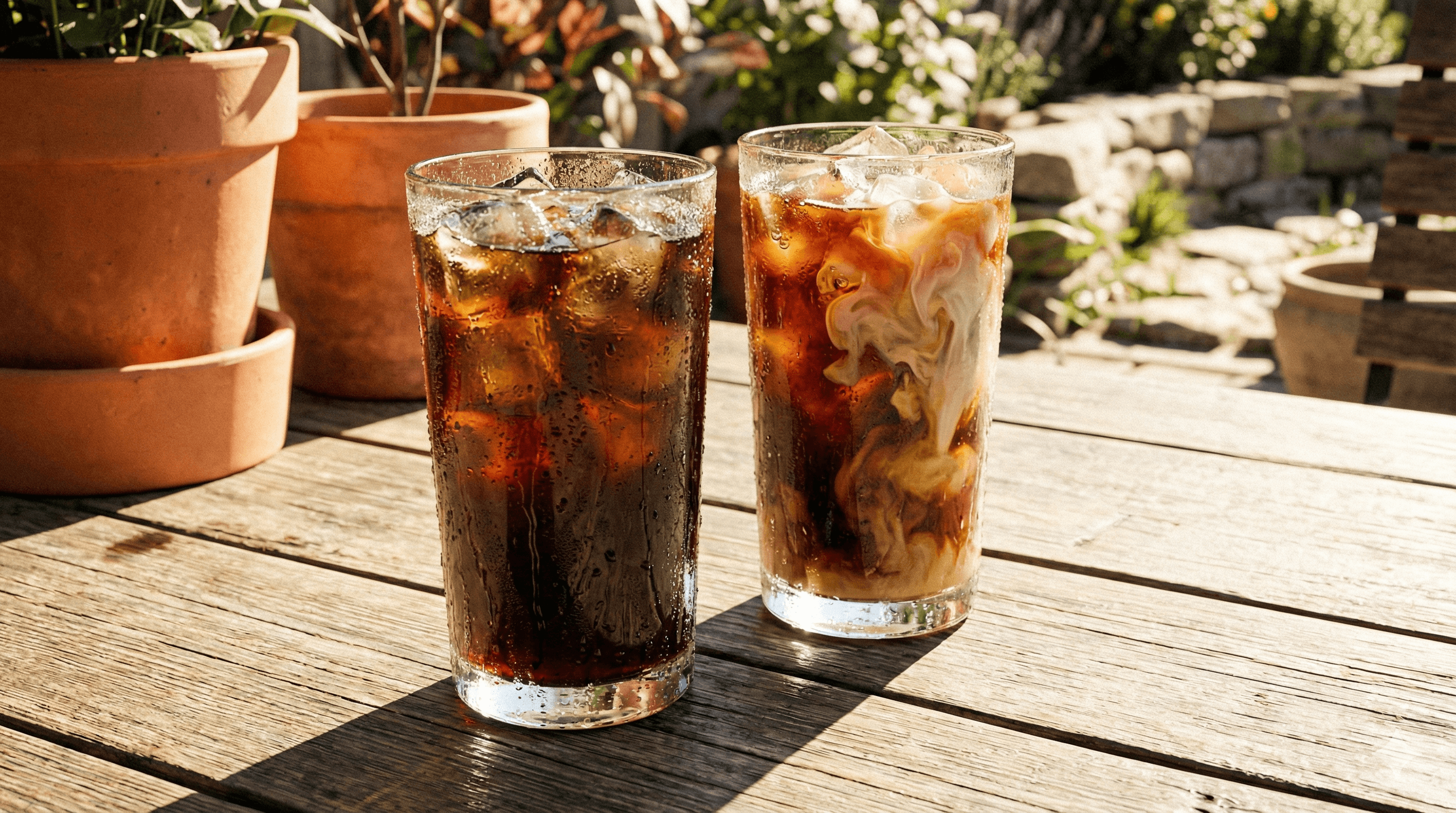
Cold brew and iced coffee aren't the same thing. They're made from completely different processes, resulting in completely different flavor profiles. One takes 12-24 hours. The other takes five minutes. Understanding why is your gateway to mastering summer coffee.
The Fundamental Difference: Chemistry Over Time vs. Heat
Iced Coffee: Hot Brewing, Then Cooled
You brew coffee hot using any method (pour-over, French press, drip), then pour it over ice. The ice dilutes the coffee slightly as it melts. Fast, convenient, tastes essentially like regular hot coffee—just cold.
Cold Brew: Time-Based Extraction
Cold brew is patient chemistry. Coarse grounds steep in room-temperature or cold water for 12-24 hours. Water molecules move slowly at low temperatures, so extraction happens gradually. Over time, specific flavor compounds dissolve while others—particularly tannins and acids that usually contribute bitterness—dissolve much more slowly or not at all.
According to Bootlegger's 2026 trends report, cold brew has become a premium category precisely because its unique brewing method creates distinct sensory experiences that hot coffee cannot replicate.
How Temperature Changes What You Taste
Temperature dramatically alters how your taste receptors perceive coffee. Hot water extracts certain compounds aggressively; cold water extracts others gently.
Hot Extraction (Iced Coffee):
Extracts tannins and acids quickly
Tannins create astringency (drying sensation)
Acids contribute brightness and vibrancy
Result: Tastes similar to hot coffee, just cold
Cold Extraction (Cold Brew):
Tannins extract very slowly or not at all
Acids remain in the bean longer
Different compounds dissolve at different rates
Result: Smooth, sweet, sometimes chocolatey, minimal astringency
Head-to-Head Comparison
Flavor & Taste
Iced Coffee: Bright, crisp, sometimes acidic. If the original coffee was fruity, those notes come through clearly. You taste roast characteristics distinctly.
Cold Brew: Smooth, sweet (not because of added sugar, but minimal tannin extraction), sometimes chocolatey. Fuller and heavier than iced coffee made from the same beans. Acidity is notably lower.
Body & Mouthfeel
Iced Coffee: Light to medium body, crisp finish. Feels refreshing. Clean-slate sensation.
Cold Brew: Heavy, full body, smooth mouthfeel. Almost velvety. Because tannins aren't extracted, there's no astringency—just smooth richness.
Dilution Factor
Iced Coffee: Dilutes as ice melts. Strong cup becomes weaker over time.
Cold Brew: Typically served concentrated, needing water or milk added. You control dilution intentionally.
Brewing Methods & Variables
Iced Coffee: Quick & Simple
Method: Brew hot (any method), pour over ice
Brewing Time: 4-5 minutes
Beans to Use: Any specialty coffee, especially light-to-medium roasts. Brightness that makes light roasts interesting translates beautifully to iced coffee.
Best Scenario: When you want cold coffee quickly and want to taste the coffee's true origin character.
Cold Brew: Patient & Delicate
Method: Combine coarse grounds with cold or room-temperature water, let steep 12-24 hours, strain
Brewing Time: 12-24 hours (passive)
Beans to Use: Medium-to-dark roasts shine beautifully. Light roasts work, but you lose some brightness.
Water Ratio: 1:4 or 1:5 (coffee to water) produces concentrate
Best Scenario: When you want maximum smoothness, large quantities, or something that tastes completely different.
Making Great Cold Brew at Home
Basic Recipe:
Coarse grind: 1 cup coffee to 4 cups cold water
Combine in jar, stir gently
Cover loosely, sit at room temperature 12-24 hours
Strain through fine mesh, then cheesecloth
Store in fridge up to 2 weeks
Dilute with water or milk when serving
Key Variables:
Grind size: Coarse is critical
Water quality: Use filtered water
Steeping time: 12 hours = milder, 24 hours = bolder
Temperature: Room temperature brews faster than cold
The Growing Trend: Nitro Cold Brew
The latest cold coffee innovation is nitro cold brew—cold brew infused with nitrogen gas, similar to Guinness. Nitrogen creates tiny bubbles, giving coffee creamy texture and cascading visual effect without added milk.
The future of cold coffee is clearly evolving beyond simple iced coffee toward more sophisticated, deliberately-crafted cold brew experiences.