Brew
Mar 29, 2026
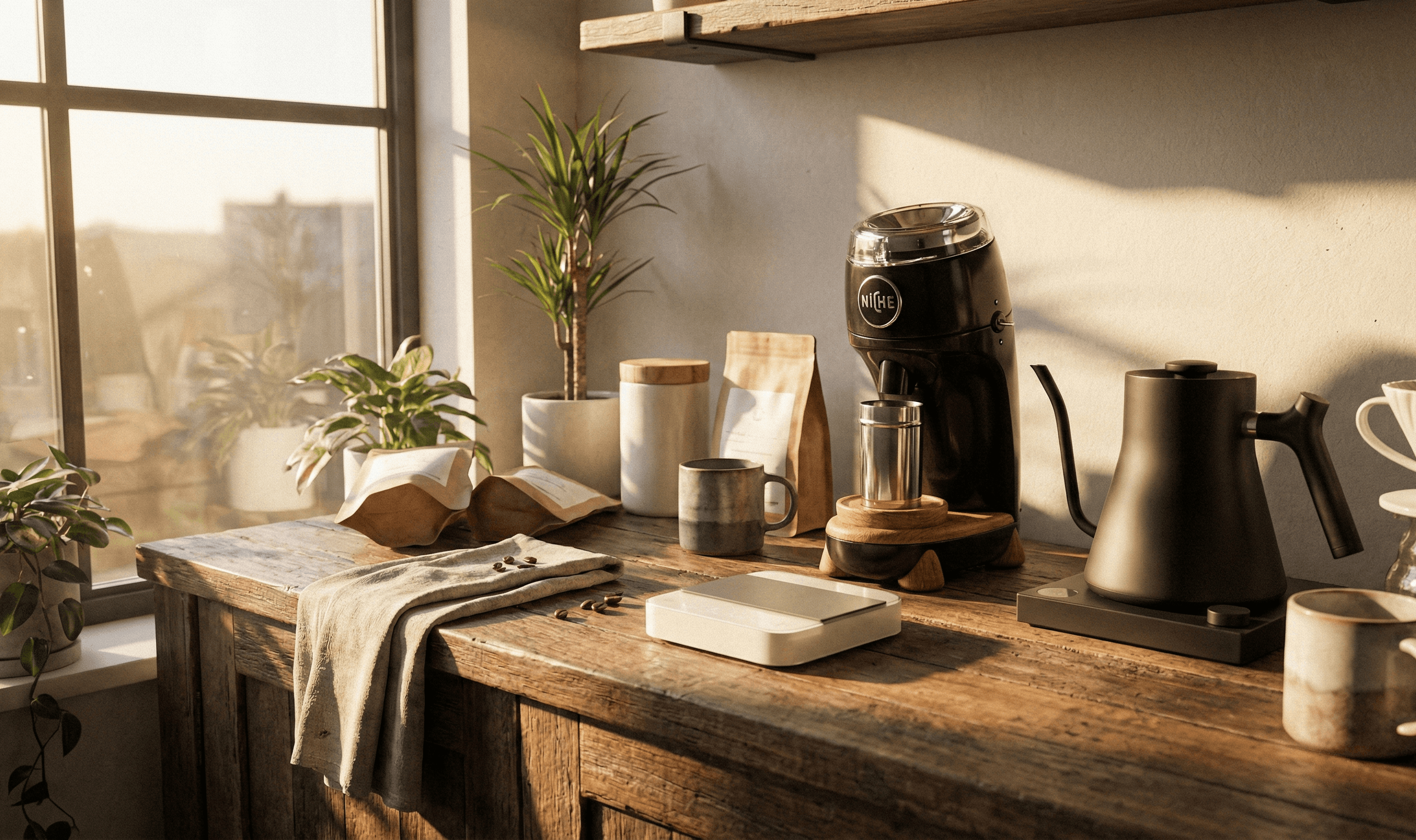
A home coffee bar isn't about having every gadget. It's about having the right tools to brew coffee intentionally. A great home coffee setup doesn't require $3,000. It requires understanding what each tool does and why it matters. With five essential pieces of equipment and commitment to learning, you can brew coffee at home that rivals most café offerings.
The Essential Five: What You Actually Need
1. A Good Burr Grinder ($40-$300)
Why it matters more than anything: Grind size and consistency control everything. A bad grinder creates uneven particle sizes, leading to inconsistent extraction and muddy flavors.
What to look for:
Burr type: Burr grinders (conical or flat) are infinitely superior to blade grinders
Grind settings: At least 15-20 settings for flexibility
Consistency: Particles should be uniform in size
Price sweet spot: $80-$150 gets you a reliable, consistent grinder (Baratza Encore, Wilfa Svart)
At minimum, invest in a burr grinder. A cheap grinder ruins good coffee. A great grinder makes decent coffee taste better.
2. A Brewing Device ($10-$50)
Choose one based on your taste preferences:
Pour-Over (V60, Chemex, Hario): $8-$40. Produces clean, bright coffee. Requires precision and attention. Rewards careful technique.
French Press: $15-$40. Produces full-bodied, rich coffee. Forgiving and simple.
AeroPress: $30-$40. Produces smooth, balanced coffee. Fast and versatile.
Moka Pot (Stovetop Espresso): $10-$30. Produces concentrated, espresso-like coffee. Fun and affordable.
Pro tip: Start with one brewing device and master it before adding others.
3. A Temperature-Controlled Kettle ($50-$150)
Why temperature control matters: Water temperature directly affects extraction. Too hot = over-extraction and bitterness. Too cold = under-extraction and sourness.
What to get: A gooseneck kettle with temperature control (Fellow Stagg EKG, Brewista Artisan, or basic model)
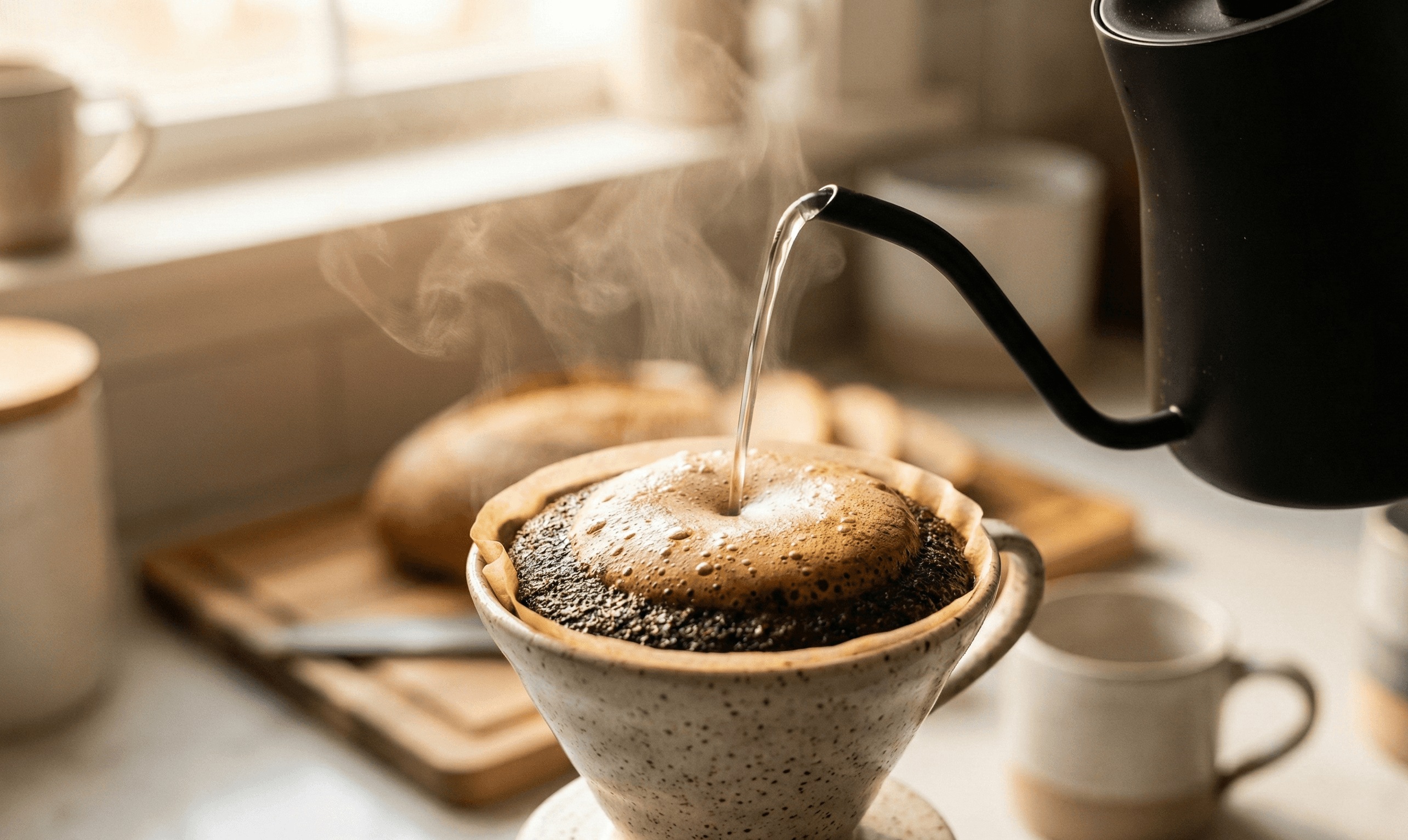
Why gooseneck matters: The thin spout lets you pour slowly and precisely. You can't pour-over well with a regular kettle.
If budget is tight: Use a regular kettle and wait 30-40 seconds after boiling. But a temperature-controlled kettle is the single best investment in your home setup.
4. A Scale ($20-$100)
Why weighing matters: Coffee brewing is chemistry. Water-to-coffee ratio matters enormously.
What to get: A digital scale with 0.1g precision and at least 5kg capacity
Why it matters:
"One scoop of coffee" varies wildly
"Two cups of water" is vague
A scale lets you reproduce the exact same brew every time
Reproducibility = learning
Pro tip: Use weight ratios (1:16 coffee to water is standard) rather than volume measurements.
5. Fresh Coffee ($8-$15/12oz bag)
Why fresh matters: Coffee beans peak 5-30 days after roasting. Older coffee tastes stale.
What to buy:
Buy whole beans, not pre-ground
Look for roast date on the bag
Aim for beans roasted within the last 2-3 weeks
Buy from local roasters or quality online sources
Storage: Airtight container, room temperature, away from light. Not the freezer (damages beans). Not the fridge (moisture exposure).
The Secondary Five: Nice-to-Have Equipment
Once you've mastered the essential five, these upgrades enhance your ritual:
Coffee Tamper & Distribution Tool: Makes espresso-style tamping easier. $10-$30.
Milk Frother: For lattes and cappuccinos. $15-$150.
Timer: Ensures consistent brewing time. $5-$20.
Cupping Spoons & Tasting Cups: For intentional tasting. $10-$40.
Grinder Cleaner Brush: Keeps grinder optimized. $5-$10.
The Layout: Organizing Your Space
A functional home coffee bar doesn't require much space:
Counter space: 2-3 feet is enough. You need room for: grinder, brewing device, kettle, cup, scale.
Storage: Keep beans in an airtight container. Store tools in a small shelf or drawer.
Workflow: Arrange equipment in order of use:
Grinder (where you start)
Scale
Kettle
Brewing device
Cup
Aesthetic touch: Some people add a small shelf with tasting cups, a notebook for brewing notes, or a candle. Make it a space you enjoy spending time in.
The Ritual: A Simple Workflow
Once your bar is set up, your daily brew ritual might look like this:
1. Heat water (5 minutes) - Fill kettle, turn it on, let it heat to 200°F
2. Grind coffee (2 minutes) - Weigh your beans, grind to medium consistency
3. Brew (4-5 minutes for pour-over, 4 minutes for French press)
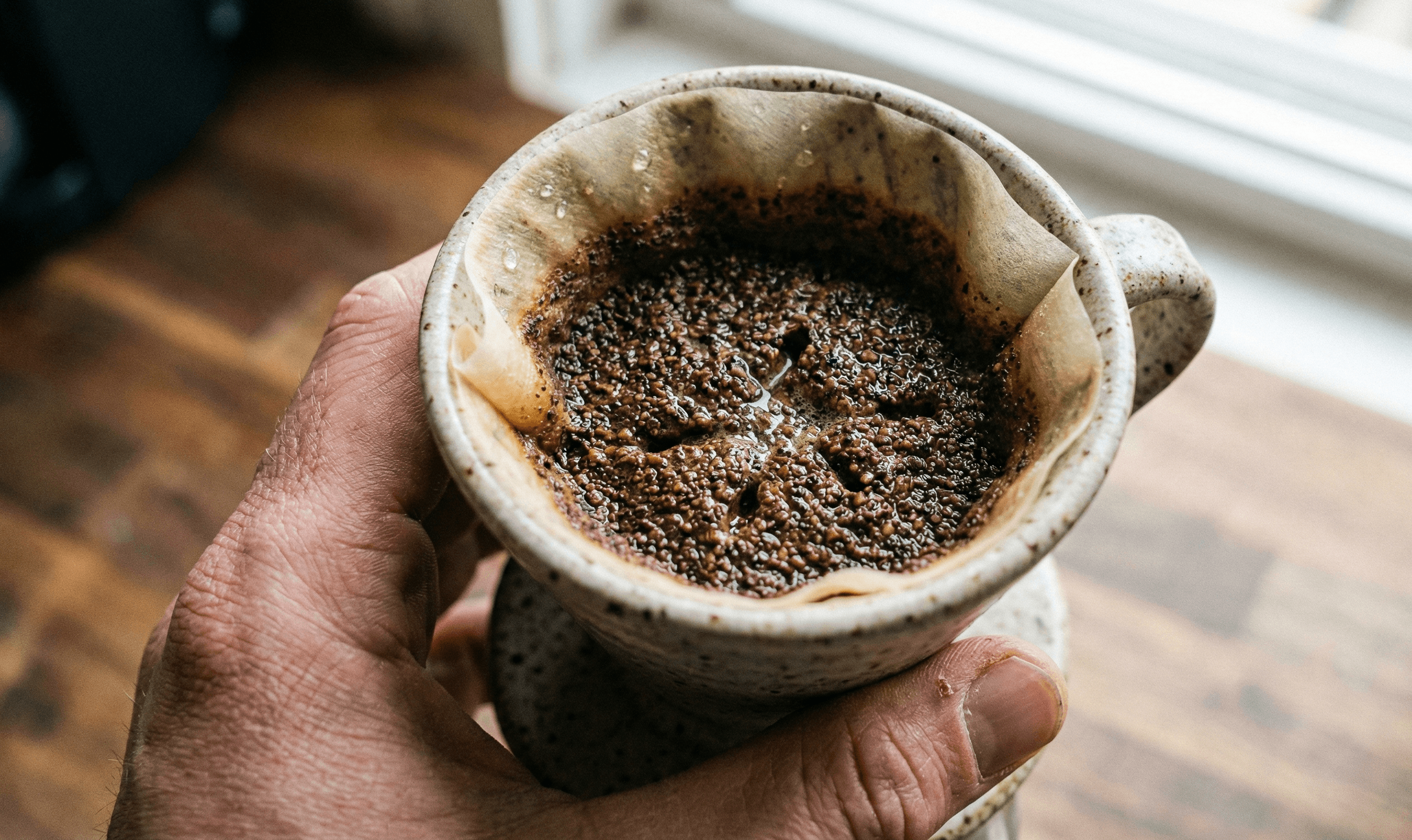
Bloom (if using pour-over): 30 seconds with small pour
Main brew: 3-4 minutes
Pour or press
4. Taste (5+ minutes) - Sip slowly, notice flavors, write notes if you want
Total time: 16-20 minutes
This ritual—seemingly simple—becomes your daily meditation. You're present. You're focused. You're learning your palate with every cup.
Budget Breakdown: Three Scenarios
Minimal Budget ($100-$150):
Baratza Encore grinder ($35)
V60 with filters ($8)
Basic gooseneck kettle ($20)
Basic scale ($15)
Fresh coffee ($15/two bags)
Total: ~$100
Moderate Budget ($250-$400):
Wilfa Svart grinder ($90)
Chemex or quality pour-over ($40)
Gooseneck kettle with temperature control ($60)
Quality scale ($30)
Fresh coffee ($30-40/multiple bags)
Milk frother if interested ($30-50)
Total: ~$300
Premium Budget ($500+):
High-end burr grinder ($200-300)
Multiple brewing devices ($100)
Temperature-controlled kettle ($100)
Precision scale ($50)
Subscription to multiple roasters ($30-50/month)
Cupping setup ($50)
Total: $500+
The Real Investment: Learning
Equipment is important, but learning matters more. Master your brewing device. Learn how processing affects flavor. Understand how geography creates terroir.
Many Grano users find that once they've set up their home bar and committed to learning, they drink coffee differently. They taste intentionally. They appreciate origin. They develop preferences.
Coffee transforms from a commodity to a craft. That transformation isn't about the equipment. It's about the attention you pay. A $150 home setup with a dedicated learner beats a $2,000 setup with someone who doesn't care.
Start simple. Learn obsessively. Upgrade gradually as you understand what you want.